Emergency Services and How to Use Them in Busan
Living in Busan involves understanding how to respond to emergencies in a structured and efficient way. South Korea has a well-organized emergency response system, and knowing how to use it properly can make a significant difference in urgent situations. This guide explains the key emergency services, how to contact them, and what procedures to follow.
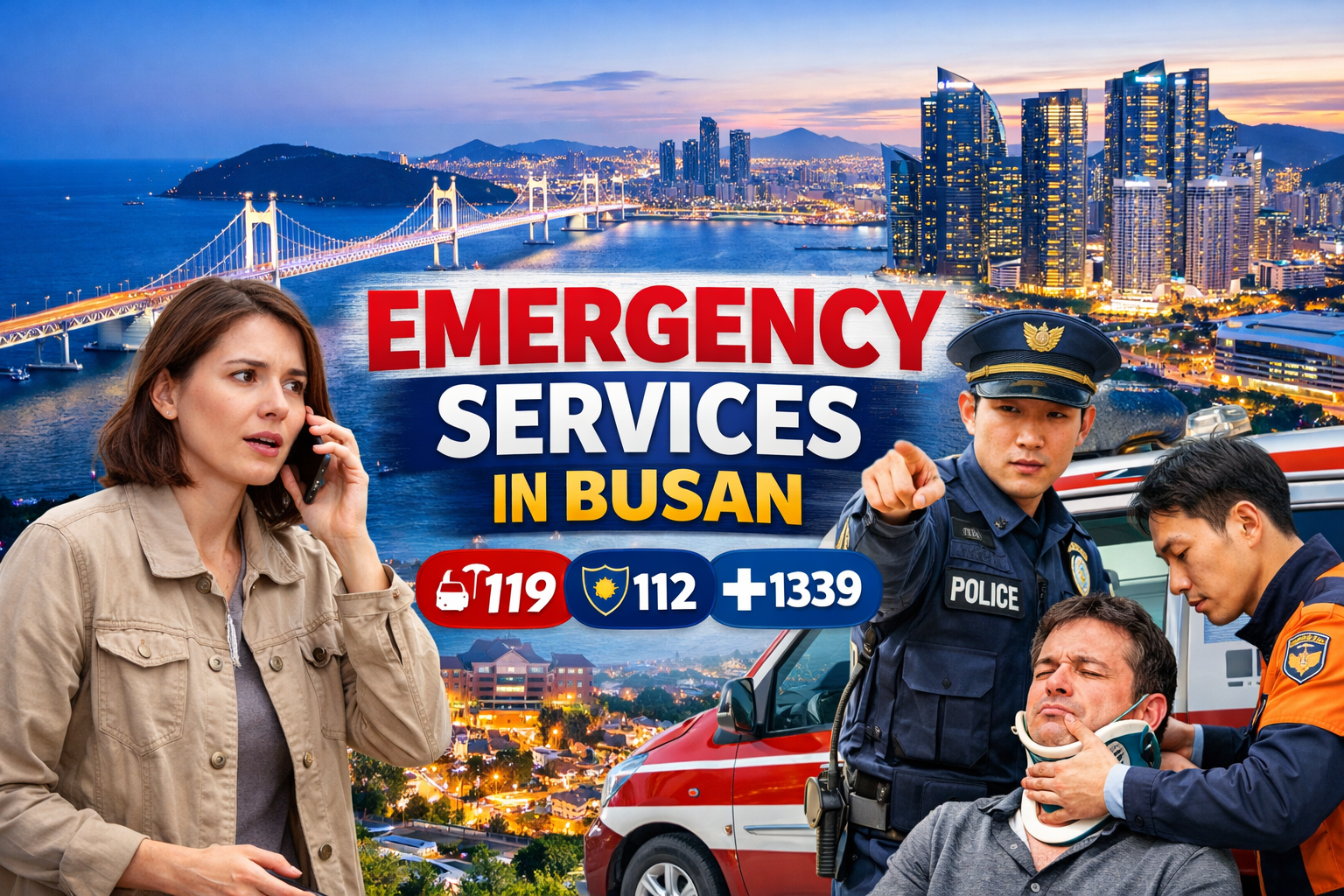
1. Emergency Contact Numbers
In South Korea, emergency services are centralized through three primary numbers:
- 119 → Fire and Medical Emergencies
- 112 → Police
- 1339 → Medical Consultation Hotline (non-emergency)
These numbers are available 24/7, and calls are free from any phone, including mobile phones without a SIM card.
Key Points
- No area code is required
- English support is available, though response speed may vary
- Location tracking is generally automatic when calling from a mobile phone
2. Fire and Medical Emergencies (119)
The number 119 connects you to fire departments and emergency medical services.
When to Call 119
- Fire or smoke incidents
- Traffic accidents with injuries
- Sudden illness (e.g., chest pain, unconsciousness)
- Serious injuries (bleeding, fractures)
What Happens After Calling
- The operator answers and identifies the situation
- You provide location and basic details
- Dispatch is sent immediately (ambulance or fire unit)
Information You Should Provide
- Exact location (address, nearby landmark)
- Nature of the emergency
- Number of people involved
- Condition of the patient (if medical)
Ambulance Use
- Ambulances are free of charge in most emergency cases
- Transport is typically to the nearest appropriate hospital
3. Police Services (112)
The number 112 connects you to police services.
When to Call 112
- Crimes in progress (theft, assault)
- Suspicious activity
- Traffic accidents without injuries
- Immediate threats to personal safety
Procedure
- The operator gathers details about the incident
- Police are dispatched to the scene
- In urgent cases, response is prioritized based on risk level
Important Notes
- For minor administrative matters, visiting a local police station is usually required
- Emergency calls should be limited to urgent situations
4. Medical Consultation Hotline (1339)
The number 1339 is not for emergencies but for medical guidance.
When to Use 1339
- Symptoms that are not life-threatening
- Questions about nearby hospitals or clinics
- Advice on whether hospital care is needed
Services Provided
- Basic medical consultation
- Information on available medical facilities
- Guidance on after-hours care
This service can help reduce unnecessary emergency room visits.
5. Hospitals and Emergency Rooms
In Busan, hospitals are categorized by size and function.
Types of Medical Facilities
- Local Clinics (의원): Minor illnesses, basic treatment
- General Hospitals (종합병원): More advanced care
- University Hospitals (대학병원): Specialized and emergency care
Emergency Rooms (응급실)
- Available 24/7 in major hospitals
- Prioritize patients based on severity, not arrival order
Important Procedures
- Bring identification (passport or ID card)
- Payment may be required after treatment (insurance may apply)
- Waiting time depends on urgency level
6. Language Support in Emergencies
Language can be a concern, but support systems exist.
Available Options
- Emergency operators may provide basic English assistance
- Hospitals often have limited English-speaking staff
- Interpretation services may be available in major hospitals
Practical Tip
If possible, prepare:
- Your address written in Korean
- A short description of your condition in simple English
7. Location Awareness and Address System
Providing an accurate location is critical in emergencies.
Address System in Korea
- Road name address (도로명주소) is standard
- Buildings often have visible number signs
- Convenience stores or large buildings can be used as landmarks
Useful Tools
- Map apps (e.g., Naver Map, KakaoMap)
- Saved home/work addresses in your phone
8. What to Do Before an Emergency Happens
Preparation helps reduce confusion during emergencies.
Basic Preparation Checklist
- Save emergency numbers (119, 112, 1339)
- Know your home address in Korean
- Identify nearby hospitals and police stations
- Keep personal ID accessible
Optional Preparation
- Install local map applications
- Learn basic emergency phrases
- Inform family or coworkers of your location
9. After the Emergency
Once the immediate situation is handled, follow-up steps may be required.
Medical Cases
- Hospital registration and billing
- Insurance claims (if applicable)
- Follow-up treatment scheduling
Police Cases
- Filing a report
- Providing statements
- Receiving documentation for insurance or legal use

Conclusion
Emergency services in Busan are structured to respond quickly and efficiently, but effective use depends on clear communication and accurate information. Understanding when to call each number, what details to provide, and how the system operates can significantly improve response outcomes.
The key is simple:
know the numbers, know your location, and communicate clearly.


