Introduction
Nampo and Jung-gu represent the historical heart of Busan.
Unlike newly developed residential districts, this area offers something different: walkable city life, deep cultural layers, and unmatched accessibility to transportation, markets, and public services.
For foreigners considering long-term stay, work assignments, or retirement-style urban living, Nampo–Jung-gu can feel more “real” than modern apartment zones. It is not always quiet or polished—but it is efficient, human-scaled, and deeply connected to daily Korean life.

Where Is Nampo & Jung-gu?
Nampo is a commercial and cultural neighborhood located within Jung-gu, Busan’s original downtown district.
This area developed around the port and has long functioned as the city’s administrative, trade, and tourism core.
Key location characteristics
- Central Busan coastline access
- Subway Line 1 connectivity
- Ferry terminals and port-related infrastructure
- Dense mix of residential, retail, and government functions
▶ Korean Summary
남포동은 부산 중구에 위치한 전통 도심 지역으로, 항만·행정·상업 기능이 오래전부터 집중된 곳입니다. 대규모 신도시와 달리 ‘도보 생활권’이 잘 형성되어 있습니다.
Daily Living Environment
Walkability and Urban Density
Nampo–Jung-gu is one of the most walkable areas in Busan.
Groceries, pharmacies, clinics, cafes, public offices, and markets are typically reachable within 5–10 minutes on foot.
This density benefits:
- Foreign residents without cars
- Short-term residents
- Elderly or long-stay foreigners who value proximity
However, it also means:
- Narrow streets
- Limited green buffers
- Higher pedestrian activity
▶ Korean Summary
생활 편의시설이 밀집되어 있어 차량 없이도 생활이 가능합니다. 다만 도로가 좁고, 주거 전용 환경보다는 상업·관광 혼합 지역의 성격이 강합니다.
Housing Types and Rental Patterns
Typical housing stock
Unlike suburban apartment complexes, housing here is diverse:
- Low-rise villas (older multi-family buildings)
- Mixed-use buildings (shops + residential floors)
- Small officetel-style units
- Some remodeled older apartments
Foreign residents often choose:
- Short-term leases near Nampo Station
- Monthly rent (wolse) units in older buildings
- Furnished units aimed at port workers or students
Cost considerations (general range)
- Rents are generally lower than Haeundae or Seomyeon
- Maintenance quality varies widely
- Building age is an important factor
▶ Korean Summary
남포·중구는 신축 아파트 비중이 낮고, 다세대·혼합건물이 많습니다. 임대료는 상대적으로 합리적이지만 건물 상태 차이가 크므로 내부 확인이 중요합니다.
Transportation & Accessibility
Public transportation strength
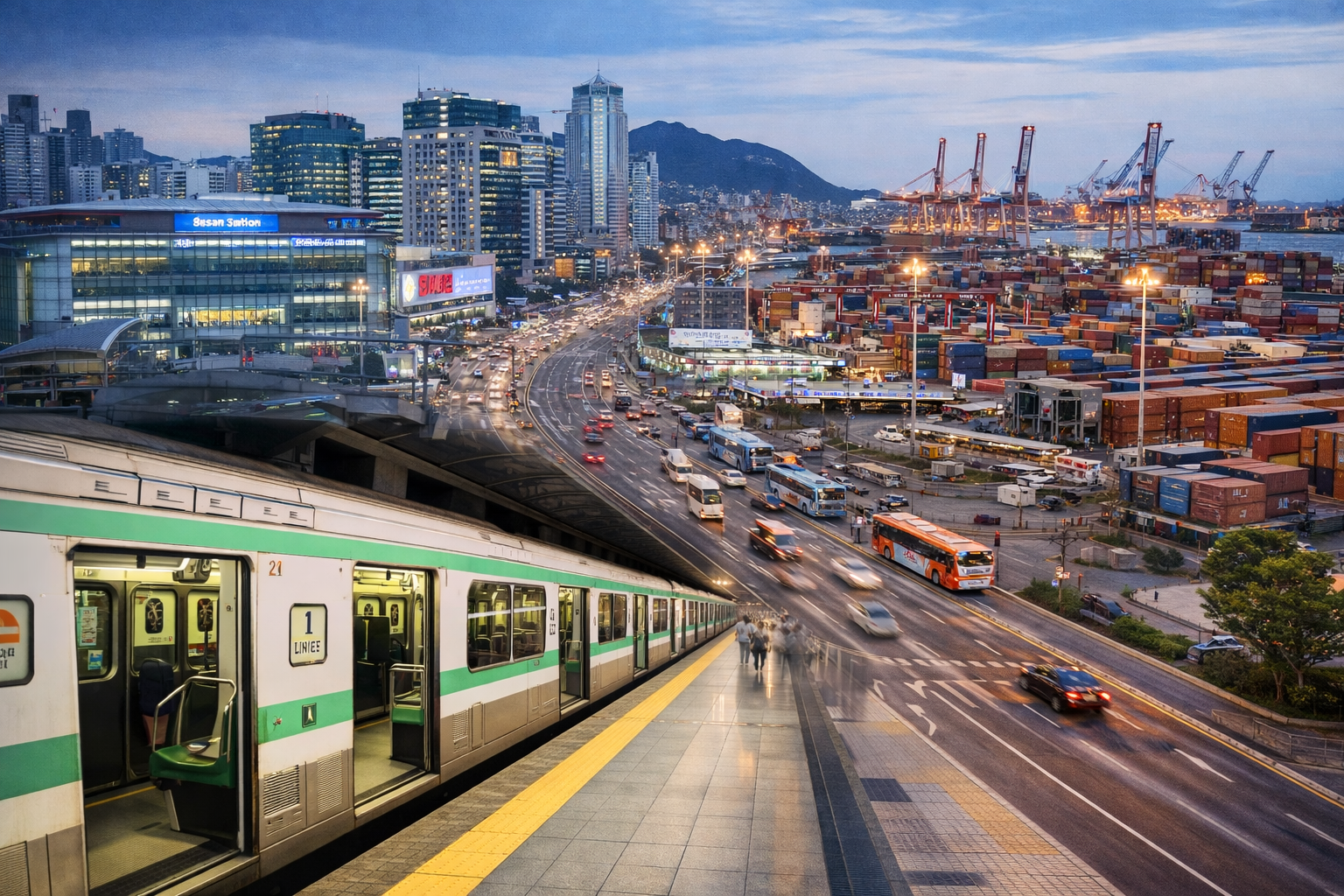
- Subway Line 1 connects directly to Busan Station
- Easy transfers to Seomyeon and Sasang
- High bus density
For foreigners working near:
- Port facilities
- Logistics companies
- Public institutions
- Tourism-related businesses
This area minimizes commute friction.
▶ Korean Summary
부산역·서면 등 주요 거점 접근성이 뛰어나 출퇴근 부담이 적습니다. 대중교통 의존도가 높은 외국인에게 특히 유리합니다.
Cultural and Lifestyle Appeal
Traditional markets & everyday culture
Living here means daily exposure to:
- Jagalchi Fish Market
- Gukje Market
- BIFF Square street food
- Yongdusan Park
This is not a “quiet expat bubble.”
It is immersive, sensory, and local.
Some foreigners appreciate:
- Authentic food access
- Lower daily living costs
- Strong neighborhood identity
Others may feel:
- Overstimulated by crowds
- Less privacy compared to gated apartments
▶ Korean Summary
관광지이자 생활권이 동시에 존재하는 지역입니다. 현지 문화를 선호하는 외국인에게는 큰 장점이지만, 조용한 주거를 원하는 경우 호불호가 갈릴 수 있습니다.
Who Is This Area Best For?
Suitable profiles
- Foreign workers near port/logistics sectors
- Long-stay visitors prioritizing cost & access
- Retirees preferring walkable city life
- Cultural explorers and researchers
Less suitable for
- Families with young children
- Those seeking modern high-rise complexes
- Residents sensitive to noise and crowds
▶ Korean Summary
남포·중구는 ‘도심형 실거주’에 적합한 지역입니다. 가족 중심 대단지 주거보다는 1~2인 가구, 장기 체류 외국인에게 더 어울립니다.
Practical Notes for Foreign Residents
| 건물 연식 | 오래된 건물 비중 높음 |
| 엘리베이터 | 없는 건물 다수 |
| 주차 | 매우 제한적 |
| 관리 상태 | 건물별 편차 큼 |
| 단기임대 | 선택지 비교적 풍부 |
FAQ
Is Nampo a good place for foreigners to live long-term?
Yes, for those prioritizing access, affordability, and cultural immersion.
다만 주거 환경의 ‘쾌적함’보다는 실용성과 위치 중심의 선택이 됩니다.
Are modern apartments available in Jung-gu?
They exist, but are limited. Most housing is older or mixed-use.
신축 대단지는 드물고, 소규모 주거가 주를 이룹니다.
Is it tourist-heavy year-round?
Weekends and holidays are busier, but daily life zones remain functional.
관광지와 생활권이 겹치지만 완전히 관광지화된 지역은 아닙니다.

Conclusion
Nampo and Jung-gu offer a different kind of Busan living.
Not suburban comfort, but urban efficiency, history, and immediacy.
For foreigners who value:
- Walkable routines
- Transportation simplicity
- Authentic local rhythm
This area remains a practical and culturally rich option.
Law & Writer Comment
Sometimes the best place to live is not the newest—but the most connected.
Nampo–Jung-gu continues to function not as a trend, but as a working city core.


